<100 subscribers
Share Dialog
Share Dialog


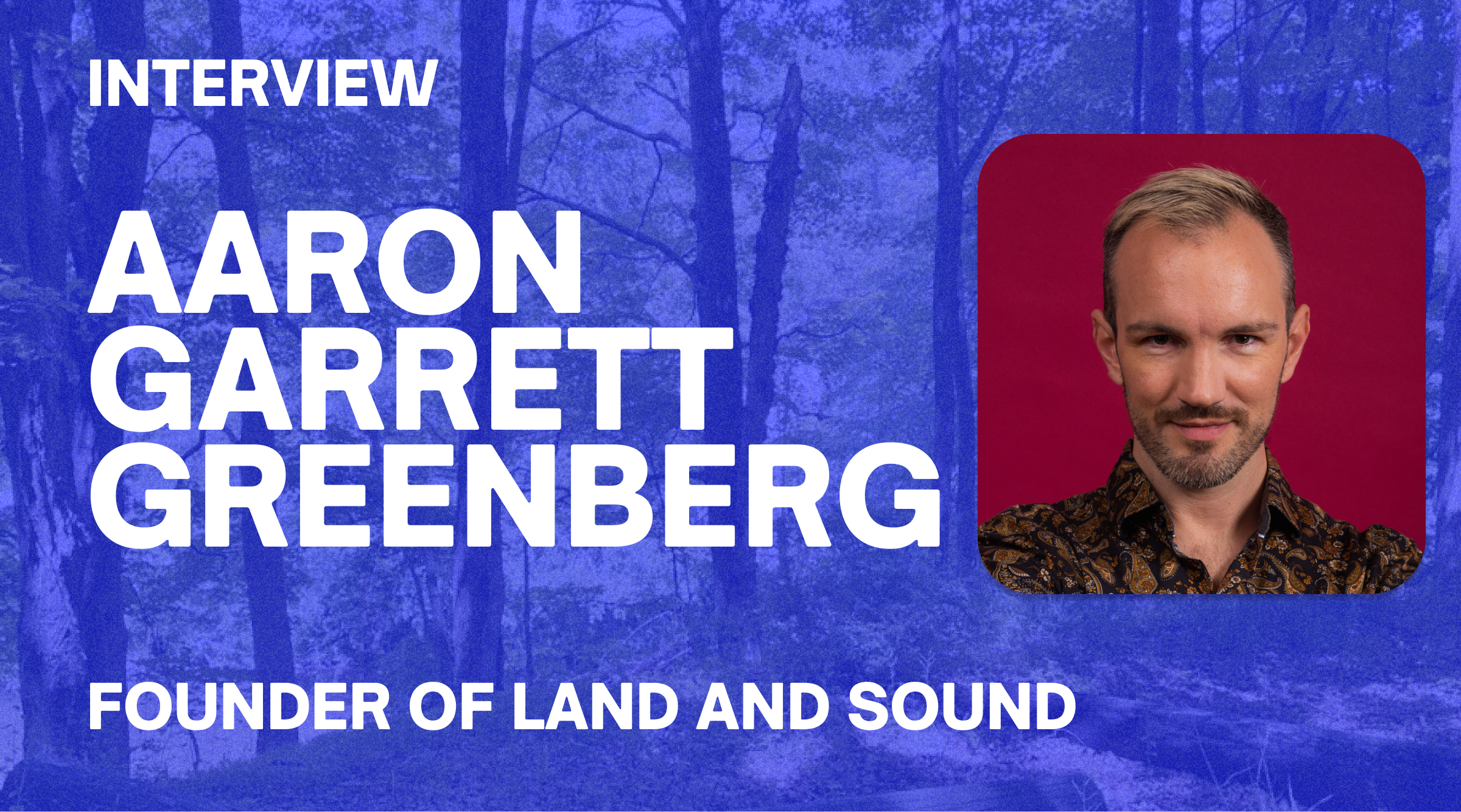
Onchain land is the next frontier in real estate ownership. Trailblazers are embarking on untried paths, and setting trails for even more adventurers to follow in their footsteps. Within Fabrica’s orbit, there are land enthusiasts who see the potential for the rapidly growing RWA (real world asset) movement. One of these trendsetters is Aaron Garrett Greenberg, founder of Land and Sound. In 2021, he founded Land and Sound to break new ground with collective, experimental land ownership. With a passion for land conservation, and experiential event design, Aaron has a vision for how owning land onchain fits into the future plans for his properties. His leaps of faith into this unprecedented new world offer a springboard for even more pioneers to follow.
Before becoming a land owner, Aaron carved out a niche as an underground event producer in California, hosting nomadic spa parties and healing arts events in what he describes as a “magical garden.” These gatherings featured harp music, sound therapy, massages, and open mics, using land as an outdoor venue whose potential was activated by artists and brought people from all walks of life together. This experience acted as his gateway to land ownership and profoundly shaped his future visions for the properties in his holdings.
Now, as a licensed massage therapist, Aaron has traveled across many states, developing a keen sense of what he seeks in land. He has a penchant for open spaces that evoke a sense of mystique. A lifelong nomad, he recently put down roots in Borrego Springs, and purchased two properties—one in California, and one in New York—that have been onramped as land NFTs on Fabrica.
Admitting his initial lack of knowledge about blockchains and crypto, that didn’t stop him from trying. Through Fabrica, he discovered a community of like-minded landowners who offered him their knowledge of onchain land. When he discusses his activity with skeptics, he quickly demystifies the process, saying, “It’s not that crazy. It’s just a land trust. And you’re able to exchange and sell it online. That’s all it is.”

Land collectors understand that the search for the perfect parcel is part of the journey. For Aaron, the thrill comes from visiting a site multiple times before placing an offer or through winning an auction. He made several trips to his California plot, taking advantage of his frequent visits to Yosemite, sometimes visiting the land multiple times within a single week. Aaron won his New York property through an online auction, where he faced no competition. Feeling exceptionally fortunate, he envisioned building a trail on the land even before he discovered its existence. Proud of this acquisition, he recognizes its potential, especially given its proximity to New York City, which is just an hour away. For him, finding land that resonates personally and aligns with his interests ignites him to push further.
His eyes light up when he talks about building, developing, and activating his land. The New York property may be landlocked, but sits near the new Schunnemunk Rail Trail development that serves as a bikeway and pedestrian path, offering opportunities for fishing, kayaking, and even a stage near the river for recording arts or reading books. His Dunsmuir property, situated near Mount Shasta in rural California—one of his favorite places in the world—boasts abundant fly fishing, the sound of trains echoing through the mountains, and a mystical atmosphere. He envisions constructing a day-use structure on it, facing the forest, where people can use synthesizers and headphones to record music in the ambience of nature.
The real world utility and beauty of the land is important, but its tokenization as an NFT offers new avenues for experimentation. Once his properties were onramped to Fabrica, Aaron was the first person to take out a loan against one of his parcels. The process was quick; within five minutes of accepting the loan, $8,000 landed in his wallet. With the loan, he plans to search for a new property in Texas to expand his growing portfolio. If finding a plot in Texas doesn't work out, he intends to develop his Northern California property, ensuring a win-win scenario.
At his core, Aaron is a connector. This is evident from the locations of his properties near railroad tracks and rivers, with dreams of hosting events to facilitate access and connection. He aims to extend this concept into the future, envisioning owning a network of properties to form a blockchain-based Hip Camp. His idea includes developing an artist token that grants camping rights across his land holdings. He wants to offer musicians and bands the ability to record in quiet, secluded spots with solar hookups, away from the disturbances of sound pollution, making these places uniquely suited for off-grid recordings and field work.
Aaron believes in creating collaborative spaces where unused land is governed collectively, appealing to artists, videographers, photographers, and media producers who find the costs of city recording prohibitive. He envisions scenic locations not just for leisure but as creative studios for filming and production, proposing a bicoastal matrix that serves as both a physical and digital resource for creators to realize their dreams. As technology and physical land begin to intertwine more closely, Aaron's role in assembling the pieces and connecting new trails will be viewed as prescient.
Even after the land is owned, developed, and experimented with, the end goal for onchain land owners like Aaron revolves around independence, self-governance, and autonomy. His aim is not to disappear off the grid, but to carve out a future that’s fully in his control. By bringing land onchain, it becomes networked and removed from obscurity, embedded as an integral part of personal history that continually evolves and reveals more over time. With every venture into uncharted territory, he paves a path for others to follow, marking a trail of innovation and discovery.
Fabrica: Aaron, why did you start buying land?
Aaron Garrett Greenberg: I wanted to start building wealth that I was passionate about. And I've always loved the outdoors. Open spaces like Atlas Obscura, things that people do with open space has always interested me. I wanted to own land as basically a way for me to build wealth because that was the most interesting thing to do.
Fabrica: Aaron, why do you own land in different states?
Aaron Garrett Greenberg: New York and California are like two halves of a locket for me. I do have professional licenses in both states for doing massage therapy, but also have volunteered and worked with different event planning and festival, not just in those states, but all over the place. I've had about 15 years of nomadic lifestyle until moving to San Diego and really putting down roots. But that was the cause behind it too was wanting to pick a place after moving around a lot and start actually investing in some locations that I actually like. The places that I bought land, it was because I like those places.
Fabrica: How did you find each property?
Aaron Garrett Greenberg: One of them I did, one of them I did not. The California land, I sought it out, visited it because it was in my area that I was actually living at the time. Like at the time I was in Yosemite and I was able to drive out there. It was a few hours, but I took a drive two or three times in a week to go see it before. And I didn't know a lot about due diligence at the time, but it was actually a payment arrangement. So I had extra time to do my due diligence because I could have changed around my investment or backed out if it was really awful. So that was the first one I came across. And then shortly after that, about two months after that, I was participating in auctions in New York State. And that's where I won the New York parcel by bidding on it on an online auction. I participated in a lot of auctions since then and I haven't been as lucky as I was that time. But I think it's because I looked at it on the map and I saw that trail in my mind before I even started looking up the news articles about what was going on. For whatever reason, that one slipped through the cracks and I was able to snatch it up. And I'm really proud of it. I think it has a lot of potential, especially because it's one hour from New York City, the Shunamunk rail trail. And I have spoken with Open Space Institute, one of their planners a couple years ago. Cause I was seeing if they wanted to rent or buy this parcel. And at the time they said it was too small for their portfolio, but that's how I confirmed that it was the one that I thought it was. Not to mention that when you look at their website, they have the Highlands West Connectivity Trail and you can open up the map and it shows the line going through. Salisbury Mills, Erie Property Corp. Had it for a long time before they sold it to Open Space. And then I think ultimately Open Space is going to sell it to the county, is the way that works. I admire that organization a lot and it's really fun to follow all the different projects they do and imagine myself doing something similar on the small scale. Like they have. They have their portfolio and like, when I get on people's websites and I see a curated collection of something that you can tell there's a lot of love behind it. That's cool to me.
Fabrica: How was the experience of getting a loan?
Aaron Garrett Greenberg: It's pretty cool because I don't think there's a lot of places that are giving out loans for land as collateral. It was super easy being the first person. This was like in beta at the time, but I was able to just click on the link and agree to the terms. And it was like five or six minutes later that the USDC was put into my wallet. It definitely gave me an adrenaline rush. But this is exciting and this is fun. That's a valuable thing because it allows you to borrow against the land you have and then reinvested in more properties if you want to, which is what I'm planning to do. I'm planning to go to Texas in April for the eclipse with our rv. And like I do, I want to go see and pick out a parcel that I like. I'm interested in the Big Bend area, so we're going to hit that up on our way to Del Rio. I think that's part of the fun of it for me too, is searching and researching. If I find something, like maybe put 50% down, then I get down to Texas. Or if I don't find something, then I'm going to probably use that money to build the Dunsmere build because I have a permit already to start building trail. It's really easy with Siskiyou county to set it all up. So I was planning on going up there at some point in 2024 as well as Texas, going up to Northern California for At least a month or something and start building the trail and flattening some earth because I just need a 10 by 10 clearing. And then I'm going to build that 8 by 8 structure. I want to build it out of like stone. I want to do stonework or something really exceptional. It's going to really boost the value of it. And whether I sell it or not, other people will want to go there and experience it and that's exciting.
Fabrica: What are your future visions for Land?
Aaron Garrett Greenberg: Hip Camp that's also maybe even like a publishing label. I'm going even more tangential with it, but I see maybe developing something like an artist toke that gives people rights to camp anywhere that's in my portfolio. And not just camp there, but like maybe rehearse. If they have a band or record. If they've got like a solar hookup or something, they can go out there and record off grid. You really want quiet places, especially if you're into field recording, which is another one of my interests. Like these places are novel for those sorts of things because they don't have sound pollution, the ones that I have. But bringing it on chain a lot. I think if I'm. If we're all onto something, we're going to be able to govern this land in really creative ways. And that's what's most appealing to me. Otherwise it's not going to get used. First of all, there's a lot of land that you want that you can see potential if you're an artist. And I think that applicable uses would be any sort of media production especially I didn't even mention photography, videography, any sort of media production. Like it's expensive to record in cities and places and people often go out of the country. So I would love to learn about film contracts in addition, maybe run this, that direction where people are contracting for these scenic locations to film and produce. When I came from New York To California in 2020, I was planning some sort of underground event because I wanted to have a gathering so badly. And I was like, I'm just going to move to California and I'm going to do a spa pop up. Because I'm coming from the hospitality world, but I want to have performance too. So I was like, you could have someone playing a harp while people are having sound therapy and massages and doing an open mic spoken word sort of thing. A year and a half after that, in San Diego County, I hosted a nomadic spa party called the Dry Spell and it was a healing arts and storytelling event. In a really, like, magical garden with a lot of art installations and pyrotechnics. I was almost there because I wanted to host it on my own land. But this guy that I rented from, he was doing exactly what I wanted to. He owned a piece of land and was running it as an outdoor venue. So that was a celebration and a gateway into land ownership because I was already looking at. I could spend a lot of money and rent a venue, or I could save money and try and create a venue even if it is off grid. There's a lot of events that are budding that they use portable utilities and things like that, and they just pull it off. And you bring in the water and you bring in the power and you work with. If you're in a really rural area, there's probably not a lot of obstacles to having a gathering like that. I know people a lot of places because of traveling and working in the industry that I do. I do envision a bi coastal matrix of creators and using the land as a physical and digital resource to make all their dreams come true.
Onchain land is the next frontier in real estate ownership. Trailblazers are embarking on untried paths, and setting trails for even more adventurers to follow in their footsteps. Within Fabrica’s orbit, there are land enthusiasts who see the potential for the rapidly growing RWA (real world asset) movement. One of these trendsetters is Aaron Garrett Greenberg, founder of Land and Sound. In 2021, he founded Land and Sound to break new ground with collective, experimental land ownership. With a passion for land conservation, and experiential event design, Aaron has a vision for how owning land onchain fits into the future plans for his properties. His leaps of faith into this unprecedented new world offer a springboard for even more pioneers to follow.
Before becoming a land owner, Aaron carved out a niche as an underground event producer in California, hosting nomadic spa parties and healing arts events in what he describes as a “magical garden.” These gatherings featured harp music, sound therapy, massages, and open mics, using land as an outdoor venue whose potential was activated by artists and brought people from all walks of life together. This experience acted as his gateway to land ownership and profoundly shaped his future visions for the properties in his holdings.
Now, as a licensed massage therapist, Aaron has traveled across many states, developing a keen sense of what he seeks in land. He has a penchant for open spaces that evoke a sense of mystique. A lifelong nomad, he recently put down roots in Borrego Springs, and purchased two properties—one in California, and one in New York—that have been onramped as land NFTs on Fabrica.
Admitting his initial lack of knowledge about blockchains and crypto, that didn’t stop him from trying. Through Fabrica, he discovered a community of like-minded landowners who offered him their knowledge of onchain land. When he discusses his activity with skeptics, he quickly demystifies the process, saying, “It’s not that crazy. It’s just a land trust. And you’re able to exchange and sell it online. That’s all it is.”

Land collectors understand that the search for the perfect parcel is part of the journey. For Aaron, the thrill comes from visiting a site multiple times before placing an offer or through winning an auction. He made several trips to his California plot, taking advantage of his frequent visits to Yosemite, sometimes visiting the land multiple times within a single week. Aaron won his New York property through an online auction, where he faced no competition. Feeling exceptionally fortunate, he envisioned building a trail on the land even before he discovered its existence. Proud of this acquisition, he recognizes its potential, especially given its proximity to New York City, which is just an hour away. For him, finding land that resonates personally and aligns with his interests ignites him to push further.
His eyes light up when he talks about building, developing, and activating his land. The New York property may be landlocked, but sits near the new Schunnemunk Rail Trail development that serves as a bikeway and pedestrian path, offering opportunities for fishing, kayaking, and even a stage near the river for recording arts or reading books. His Dunsmuir property, situated near Mount Shasta in rural California—one of his favorite places in the world—boasts abundant fly fishing, the sound of trains echoing through the mountains, and a mystical atmosphere. He envisions constructing a day-use structure on it, facing the forest, where people can use synthesizers and headphones to record music in the ambience of nature.
The real world utility and beauty of the land is important, but its tokenization as an NFT offers new avenues for experimentation. Once his properties were onramped to Fabrica, Aaron was the first person to take out a loan against one of his parcels. The process was quick; within five minutes of accepting the loan, $8,000 landed in his wallet. With the loan, he plans to search for a new property in Texas to expand his growing portfolio. If finding a plot in Texas doesn't work out, he intends to develop his Northern California property, ensuring a win-win scenario.
At his core, Aaron is a connector. This is evident from the locations of his properties near railroad tracks and rivers, with dreams of hosting events to facilitate access and connection. He aims to extend this concept into the future, envisioning owning a network of properties to form a blockchain-based Hip Camp. His idea includes developing an artist token that grants camping rights across his land holdings. He wants to offer musicians and bands the ability to record in quiet, secluded spots with solar hookups, away from the disturbances of sound pollution, making these places uniquely suited for off-grid recordings and field work.
Aaron believes in creating collaborative spaces where unused land is governed collectively, appealing to artists, videographers, photographers, and media producers who find the costs of city recording prohibitive. He envisions scenic locations not just for leisure but as creative studios for filming and production, proposing a bicoastal matrix that serves as both a physical and digital resource for creators to realize their dreams. As technology and physical land begin to intertwine more closely, Aaron's role in assembling the pieces and connecting new trails will be viewed as prescient.
Even after the land is owned, developed, and experimented with, the end goal for onchain land owners like Aaron revolves around independence, self-governance, and autonomy. His aim is not to disappear off the grid, but to carve out a future that’s fully in his control. By bringing land onchain, it becomes networked and removed from obscurity, embedded as an integral part of personal history that continually evolves and reveals more over time. With every venture into uncharted territory, he paves a path for others to follow, marking a trail of innovation and discovery.
Fabrica: Aaron, why did you start buying land?
Aaron Garrett Greenberg: I wanted to start building wealth that I was passionate about. And I've always loved the outdoors. Open spaces like Atlas Obscura, things that people do with open space has always interested me. I wanted to own land as basically a way for me to build wealth because that was the most interesting thing to do.
Fabrica: Aaron, why do you own land in different states?
Aaron Garrett Greenberg: New York and California are like two halves of a locket for me. I do have professional licenses in both states for doing massage therapy, but also have volunteered and worked with different event planning and festival, not just in those states, but all over the place. I've had about 15 years of nomadic lifestyle until moving to San Diego and really putting down roots. But that was the cause behind it too was wanting to pick a place after moving around a lot and start actually investing in some locations that I actually like. The places that I bought land, it was because I like those places.
Fabrica: How did you find each property?
Aaron Garrett Greenberg: One of them I did, one of them I did not. The California land, I sought it out, visited it because it was in my area that I was actually living at the time. Like at the time I was in Yosemite and I was able to drive out there. It was a few hours, but I took a drive two or three times in a week to go see it before. And I didn't know a lot about due diligence at the time, but it was actually a payment arrangement. So I had extra time to do my due diligence because I could have changed around my investment or backed out if it was really awful. So that was the first one I came across. And then shortly after that, about two months after that, I was participating in auctions in New York State. And that's where I won the New York parcel by bidding on it on an online auction. I participated in a lot of auctions since then and I haven't been as lucky as I was that time. But I think it's because I looked at it on the map and I saw that trail in my mind before I even started looking up the news articles about what was going on. For whatever reason, that one slipped through the cracks and I was able to snatch it up. And I'm really proud of it. I think it has a lot of potential, especially because it's one hour from New York City, the Shunamunk rail trail. And I have spoken with Open Space Institute, one of their planners a couple years ago. Cause I was seeing if they wanted to rent or buy this parcel. And at the time they said it was too small for their portfolio, but that's how I confirmed that it was the one that I thought it was. Not to mention that when you look at their website, they have the Highlands West Connectivity Trail and you can open up the map and it shows the line going through. Salisbury Mills, Erie Property Corp. Had it for a long time before they sold it to Open Space. And then I think ultimately Open Space is going to sell it to the county, is the way that works. I admire that organization a lot and it's really fun to follow all the different projects they do and imagine myself doing something similar on the small scale. Like they have. They have their portfolio and like, when I get on people's websites and I see a curated collection of something that you can tell there's a lot of love behind it. That's cool to me.
Fabrica: How was the experience of getting a loan?
Aaron Garrett Greenberg: It's pretty cool because I don't think there's a lot of places that are giving out loans for land as collateral. It was super easy being the first person. This was like in beta at the time, but I was able to just click on the link and agree to the terms. And it was like five or six minutes later that the USDC was put into my wallet. It definitely gave me an adrenaline rush. But this is exciting and this is fun. That's a valuable thing because it allows you to borrow against the land you have and then reinvested in more properties if you want to, which is what I'm planning to do. I'm planning to go to Texas in April for the eclipse with our rv. And like I do, I want to go see and pick out a parcel that I like. I'm interested in the Big Bend area, so we're going to hit that up on our way to Del Rio. I think that's part of the fun of it for me too, is searching and researching. If I find something, like maybe put 50% down, then I get down to Texas. Or if I don't find something, then I'm going to probably use that money to build the Dunsmere build because I have a permit already to start building trail. It's really easy with Siskiyou county to set it all up. So I was planning on going up there at some point in 2024 as well as Texas, going up to Northern California for At least a month or something and start building the trail and flattening some earth because I just need a 10 by 10 clearing. And then I'm going to build that 8 by 8 structure. I want to build it out of like stone. I want to do stonework or something really exceptional. It's going to really boost the value of it. And whether I sell it or not, other people will want to go there and experience it and that's exciting.
Fabrica: What are your future visions for Land?
Aaron Garrett Greenberg: Hip Camp that's also maybe even like a publishing label. I'm going even more tangential with it, but I see maybe developing something like an artist toke that gives people rights to camp anywhere that's in my portfolio. And not just camp there, but like maybe rehearse. If they have a band or record. If they've got like a solar hookup or something, they can go out there and record off grid. You really want quiet places, especially if you're into field recording, which is another one of my interests. Like these places are novel for those sorts of things because they don't have sound pollution, the ones that I have. But bringing it on chain a lot. I think if I'm. If we're all onto something, we're going to be able to govern this land in really creative ways. And that's what's most appealing to me. Otherwise it's not going to get used. First of all, there's a lot of land that you want that you can see potential if you're an artist. And I think that applicable uses would be any sort of media production especially I didn't even mention photography, videography, any sort of media production. Like it's expensive to record in cities and places and people often go out of the country. So I would love to learn about film contracts in addition, maybe run this, that direction where people are contracting for these scenic locations to film and produce. When I came from New York To California in 2020, I was planning some sort of underground event because I wanted to have a gathering so badly. And I was like, I'm just going to move to California and I'm going to do a spa pop up. Because I'm coming from the hospitality world, but I want to have performance too. So I was like, you could have someone playing a harp while people are having sound therapy and massages and doing an open mic spoken word sort of thing. A year and a half after that, in San Diego County, I hosted a nomadic spa party called the Dry Spell and it was a healing arts and storytelling event. In a really, like, magical garden with a lot of art installations and pyrotechnics. I was almost there because I wanted to host it on my own land. But this guy that I rented from, he was doing exactly what I wanted to. He owned a piece of land and was running it as an outdoor venue. So that was a celebration and a gateway into land ownership because I was already looking at. I could spend a lot of money and rent a venue, or I could save money and try and create a venue even if it is off grid. There's a lot of events that are budding that they use portable utilities and things like that, and they just pull it off. And you bring in the water and you bring in the power and you work with. If you're in a really rural area, there's probably not a lot of obstacles to having a gathering like that. I know people a lot of places because of traveling and working in the industry that I do. I do envision a bi coastal matrix of creators and using the land as a physical and digital resource to make all their dreams come true.
No comments yet